
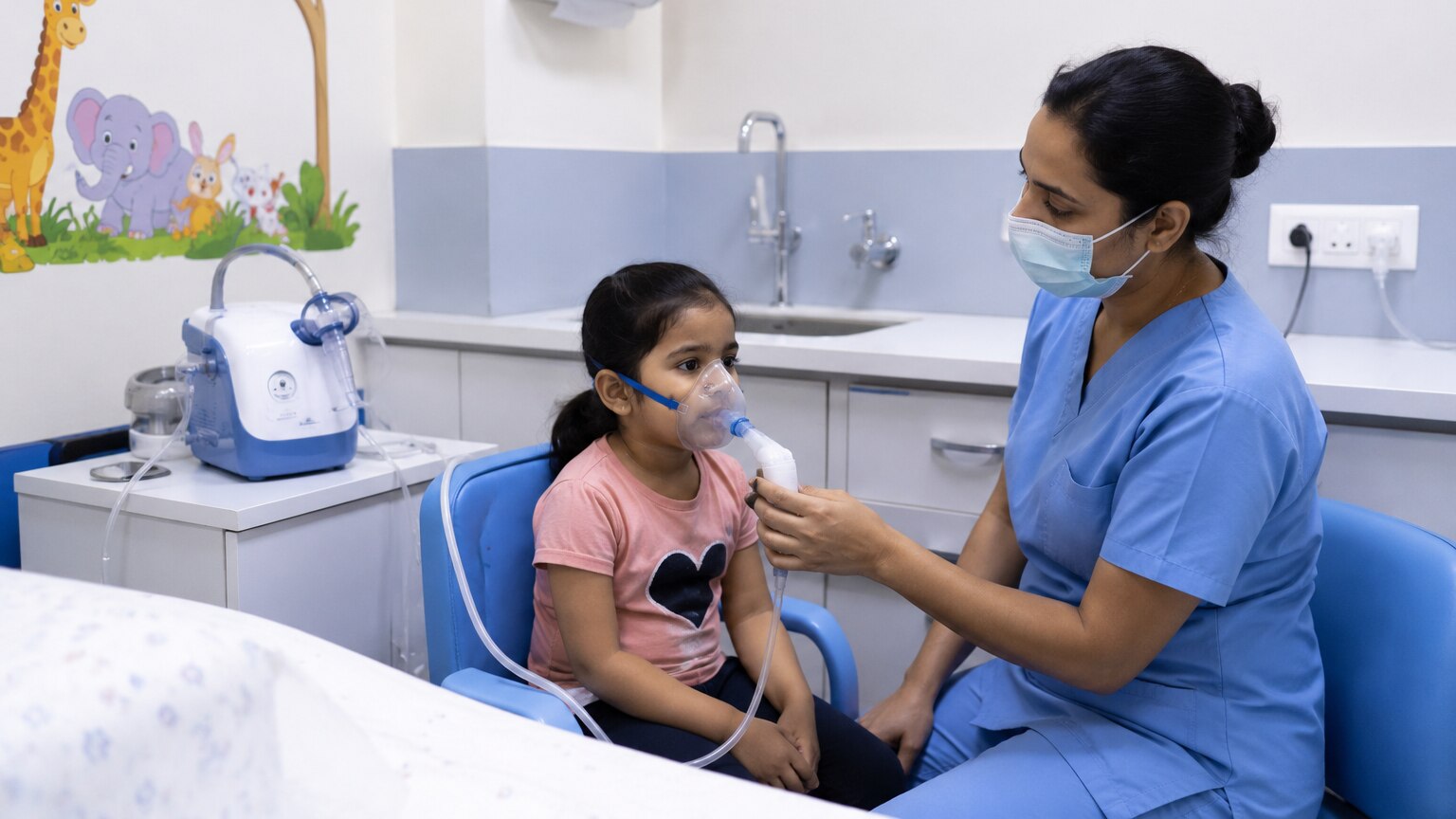
A feeding room is useful for much more than privacy: it gives you a place to feed, burp, settle, and observe a child without turning distress into a rushed waiting-room problem. A nebulisation facility adds a structured way to deliver prescribed inhaled medicine, but safe care depends on triage, positioning, equipment hygiene, and knowing when another treatment method is more suitable.
Key takeaways
- Feed, burp, settle, or prepare formula in a clean private room.
- Keep feeding and respiratory treatments coordinated with the clinical team.
- Nebulisation delivers prescribed medicine as an inhaled mist.
- Ask whether nebulisation or another treatment suits your child’s symptoms.
What can you do in a pediatric feeding room?
A pediatric feeding room gives you a clean, private place for breastfeeding, bottle-feeding, formula preparation, burping, settling, or feeding a baby before or after an examination. It is especially useful when a child is hungry, tired, reflux-prone, or overwhelmed by a busy waiting room.
1. Bring the feed your baby normally takes: expressed breast milk in a labeled container showing the child’s name and expression date and time, prepared formula, or a bottle. Pack sterilised feeding equipment, a burp cloth, bib, and spare clothes; ask the clinic before bringing hot water or preparing formula on site.
2. Wash your hands before handling milk or equipment. Expect a chair that supports an upright or semi-upright position, a clean surface, a waste bin, and guidance on storing or discarding leftover milk. Do not feed an infant flat on their back or prop a bottle.
3. Feed responsively rather than forcing the baby to finish. During bottle-feeding, pause regularly and watch breathing, swallowing, and comfort. Coughing, choking, watery eyes, a wet or gurgly sound, breathing changes, colour change, or an unusually long, tiring feed means you should stop and alert the clinician.
4. Tell staff if the child has fever, cough, breathing difficulty, or a suspected infection before entering shared areas. The clinic may triage the child first or use separation procedures to protect newborns and other children.
How does a private feeding space support safer, calmer feeding?
A private feeding space supports safer, calmer feeding because you can follow the baby’s cues instead of forcing a feed beside strangers. Responsive feeding means offering milk when the child shows hunger, pausing when the child turns away, and never insisting on an empty bottle. Privacy reduces overstimulation for a distressed child.
For bottle-feeding, sit the infant in a semi-upright position with the head and neck aligned; keep the bottle angled and pause to watch breathing and swallowing. Never feed flat on the back or prop a bottle. Staff can support formula preparation, check clean equipment, and guide safe bottle technique and burping a baby.
Unlike a waiting-room corner, the room offers a clean seat and hand hygiene before milk handling. A waste bin keeps used wipes and tissues away from the feeding area. Keep prepared formula covered and follow its storage instructions. Staff should protect privacy and triage coughing or breathless children before they share space with infants.
Stop the feed and ask for assessment if you notice:
- Coughing or choking
- Watery eyes
- Changed breathing
- Blue, pale, or grey color
- A wet or gurgly sound after swallowing
- An unusually long, tiring feed
These signs are not ordinary fussiness. A clinician can pause feeding and assess swallowing or breathing before continuing.
How should feeding and respiratory care be managed during the same visit?
Feeding and respiratory care can happen during one visit only after triage decides which need comes first. A feeding room is for a stable child; poor feeding, breathing difficulty, bluish lips or unusual sleepiness require immediate clinical assessment instead of a delayed feed or nebulisation.
1. Tell the clinician about repeated vomiting, coughing, choking, fever, tiring during feeds, or a wet, gurgly sound after swallowing. Staff can check breathing, colour, alertness, oxygen saturation, and work of breathing before placing the child in a shared feeding area.
2. If the child is stable, feed in the room with staff guidance. Keep an infant semi-upright with the head and neck aligned, pause regularly, and stop if breathing changes, coughing, or colour change appears.
3. Keep children with respiratory symptoms away from newborns and children attending routine care. The clinic may use source control, separate waiting routes, ventilation, and a respiratory-treatment area under its infection-control policy.
4. Treat nebulisation as treatment, not observation. Staff should reassess respiratory rate, heart rate, oxygen saturation, air entry, and response afterward; worsening fatigue, cyanosis, reduced responsiveness, or persistent severe work of breathing needs escalation.
5. Clean hands before and after contact, disinfect touched surfaces and nebulisation equipment as directed, and place tissues, masks, wipes, and other contaminated disposables in a closed clinical-waste bin. Do not return used bottles, tissues, or feeding equipment to a clean feeding area.
Keep the feeding room calm and private, but never let comfort override urgent assessment or separation from vulnerable newborns.
What happens during a child’s nebulisation session?
A session begins with a clinician confirming the prescribed medicine and checking the child’s breathing. The nebuliser compressor pushes air through tubing into the medication cup, turning the liquid into an inhaled mist.
1. Sit the child upright, with the head and neck supported. Explain and show the mask before placing it; an older, cooperative child may use a mouthpiece instead.
2. Connect the tubing and fit a well-fitting mask over the nose and mouth. It should touch the face without pressing painfully or leaving large gaps. A loose mask sends medicine into the room instead of the lungs.
3. Let the caregiver hold, comfort, or speak calmly to the child. Keep the child’s hands away from the tubing, but do not force the mask suddenly. Crying and struggling reduce medication delivery, so pause briefly to settle the child when safe.
4. Keep the compressor running until the medication cup is empty or the clinician ends the treatment. Do not add medicine, repeat a dose, or share a mask without clinical instructions and proper reprocessing.
Afterward, staff observe the child rather than sending them away immediately. They may reassess breathing rate, work of breathing, air entry, heart rate, oxygen saturation, and response. Worsening fatigue, blue lips, reduced responsiveness, or persistent severe breathing effort needs urgent escalation.
When is nebulisation the right choice, and what should you compare it with?
Nebulisation is the right choice when a clinician has identified a condition and selected an inhaled medicine, not simply because a child is coughing. Nebulized salbutamol may help bronchospasm, but it is not routine treatment for every cough or bronchiolitis; repeated doses can delay the assessment a worsening child needs.
| Option | What it involves | What to compare |
|---|---|---|
| Metered-dose inhaler with spacer and mask | Several measured puffs delivered through a chamber and well-fitted mask | Often as effective as nebulisation for mild-to-moderate wheeze, with a shorter treatment |
| Nebulizer | Liquid medicine converted into mist over several minutes | Useful when the prescribed medicine or the child’s condition requires it, but crying, poor mask fit, or equipment problems reduce delivery |
Ask the pediatric clinic:
- Who confirms the diagnosis and dose before treatment?
- Will staff check respiratory rate, work of breathing, air entry, heart rate, oxygen saturation, and response afterward?
- What happens if the child becomes exhausted, blue around the lips, less responsive, or continues struggling to breathe?
- Is the treatment area separated from the feeding space, with hand hygiene, ventilation, and surface cleaning?
- What is the written process for nebulizer cleaning and disinfection?
After every use, airway-contact parts need cleaning, thorough drying, and disinfection according to the device manufacturer’s instructions. Do not accept a shared mask or mouthpiece without appropriate reprocessing. At Sattva Pediatric - Dr. Rishabh K. Shah, ask how staff handle this process and when they would choose a spacer instead of a nebulizer.
Related services
Feeding Room & Nebulisation Facility Feeding Room & Nebulisation Facility at Sattva Pediatric Clinic Sattva Pediatric Clinic, Lalbaug, South Mumbai, is designed to provide a comfortable and child-friendly experience for... View service → |
Pediatric Respiratory Illness & Asthma Treatment Pediatric Respiratory Illness & Asthma Treatment at Sattva Pediatric Clinic – Dr. Rishabh Shah Dr. Rishabh Shah at Sattva Pediatric Clinic, Lalbaug, South Mumbai, provides expert diagnosis and... View service → |
Frequently asked questions
What can you do in a pediatric feeding room?
You can breastfeed, bottle-feed, prepare formula, burp, settle, or feed your baby before or after an examination.
How does a private feeding space support safer, calmer feeding?
Privacy reduces distractions and gives you space to position, feed, burp, and settle your child without a busy waiting room.
How should feeding and respiratory care be managed during the same visit?
Tell the clinical team when your child last fed, follow their instructions about feeding before treatment, and allow time for burping and settling.
What happens during a child’s nebulisation session?
A nebuliser changes prescribed liquid medicine into an inhaled mist delivered through a mask or mouthpiece while your child breathes normally.
When is nebulisation the right choice, and what should you compare it with?
Use nebulisation when a clinician prescribes it for your child’s condition. Compare it with treatments such as a metered-dose inhaler and spacer based on the medicine, child’s age, technique, and clinical advice.